
Jefferson Parish Directory Shelves
Jefferson Parish city directory research leans on regional collections. No single parish-only run survives. Gretna, Jefferson City, Kenner, and other communities show up inside books marketed for New Orleans or its suburbs, so geographic subtitles matter as much as titles.
| Collection | Years | Where Held | Access |
|---|---|---|---|
| New Orleans directories, multiple publishers | 1811-1960 film or microform; 1961-present print described | NOLA City Archives and New Orleans Public Library | In person, digital portions, licensed databases |
| Charles Gardner regional directory | 1861 | Digitized scan and library/archive route | Free scan; verify a library copy |
| R.L. Polk New Orleans Suburban | 1955 volume identified | City Archives or library catalog | Ask staff for suburban coverage |
| Haines CrissCross | 1966 identified; reverse method grows from 1932 era | City Archives and regional libraries | In-person volume or catalog inquiry |
| Licensed directory sets | 1861-1869 identified; 1862-1865 missing | JPL or State Library access | Library card, licensed, or on-site access varies |
The Archives warns that gaps are real. No directory covers every year. The New Orleans run carries a Civil War gap from 1862 through 1865, and later telephone and criss-cross volumes exist without any complete catalog of Jefferson-only years. A fruitless search may simply mean the volume is missing or the edition covers the wrong geography.
Gretna in an 1861 Directory
The digitized Gardner directory shows why a New Orleans title matters in Jefferson Parish. Its scope reaches beyond the city. Jefferson City, Gretna, Carrollton, Algiers, and McDonogh appear inside. One entry reads roughly “Aichinger G. d. Lafayette n. Fourth, Gretna,” with the key expanding d. as dwelling and n. as near.
The scan supplies a name, a relative address, and a town label. It offers no modern parcel or present resident. Save the title, year, page, spelling, and key.
Occupation or status marks can deepen the clue. Gardner defines forms for merchant and laborer while other books use their own keys, so a business line must be read apart from a dwelling line. Inspect the image around an OCR hit, because old type and initials invite misreading.
Jefferson Parish Directory Gaps
The missing 1862-1865 run is a publication gap. It does not prove a household left Jefferson Parish. Check the years on each side, then bridge the interval with census schedules, Clerk deeds, church registers, cemetery material, and newspaper notices. Search initials and surname variants. Maiden or widow forms matter too. Boundary labels shift. Jefferson Parish dates to 1825, and its current boundary took shape in 1874 after Orleans Parish annexations. A person can seem to move when only the jurisdiction label changed. The Mississippi River split and suburban development add more catalog paths, so record the volume's stated area before interpreting any absence.
Note: A blank directory year means the name was missing from that available volume, not that the person was absent.
Read Jefferson Parish Directory Entries
A directory entry packs facts tightly. Read the key printed in that volume first. Earlier entries may give only a relative place, while later books separate work and home addresses or add a spouse.
| Indexed name | Surname, initials, given name, and sometimes spouse or widow wording |
|---|---|
| Status or occupation | A role such as clerk, merchant, or laborer, sometimes with a business address |
| Residence clue | House and street, or older wording such as dwelling near a cross street |
| Place label | Gretna, Jefferson City, Kenner, suburban New Orleans, or another scope term |
| Source identity | Publisher, year, page, image, and abbreviation key needed to cite the find |
- Criss-cross directory
- A reverse directory arranged by street or telephone number rather than surname.
- Householder index
- A list focused on the person associated with a household entry, with rules set by the publisher.
- Abbreviation key
- The volume's legend for shortened words such as dwelling, near, corner, occupation, or place.
A directory is a dated publisher record, not a government census. Confirm any listed spouse, boarder, or widow notation elsewhere.
Reverse Jefferson Parish City Directories
Criss-cross practice appears in the regional guide from the 1932 era. It grows more common later. The 1966 Haines CrissCross is a strong Jefferson-area route. Instead of starting with a surname, follow the street and house number to a listed name or telephone entry.
Coverage still rules. Ask for the suburban volume and target year. Do not assume a central New Orleans book includes Metairie, Gretna, Kenner, or another parish community. A missing line has several explanations. The household may be unlisted, the address may have carried another number, the suburb may fall outside the edition, or the volume may be absent.
Use reverse books for historical households only. Modern parcel ownership and map layers need a different workflow. The Jefferson Parish street directory keeps the current address lookup separate from the archival hunt.
Jefferson Parish Library Research Routes
East Bank and West Bank collections live at the library. The Jefferson Parish Library genealogy resources page gathers microfilm, census tools, Sanborn maps, HeritageQuest, Fold3, Newspapers.com, NewsBank, and newspaper archives. It puts all of these in one place. Card and on-site rules differ. Try the reference desk or Book-a-Librarian at 504-838-1114. Books, periodicals, interlibrary loan, and librarian appointments are explained on JPL's research-help page.

Ask staff when the catalog lacks a suburban year. Copies may cost $0.15 per page, so bring the name, year range, municipality, and street variants.
Louisiana Directory Archive Fallbacks
The Louisiana State Library collections hold city directories, telephone books, parish microfilm, newspapers, maps, census resources, passenger lists, and WPA material. Use it when JPL lacks a year.
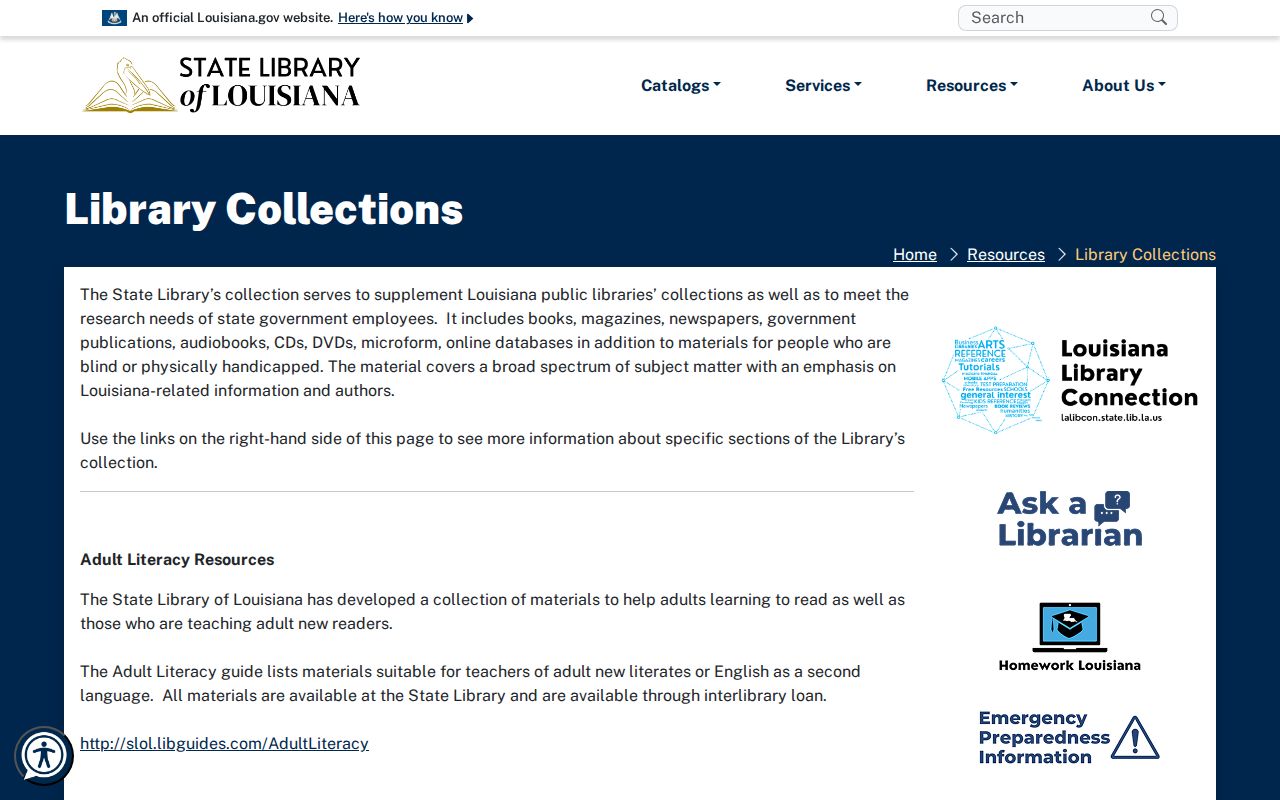
The catalog broadens a Jefferson Parish city directory search while keeping year and format visible.
New Orleans City Archives supplies the detailed regional guide. A copy request needs a year plus a name or business, with an address acceptable after 1938, and the search fee is $2 plus page charges. Searches outside New Orleans require in-person research. That limit matters for Jefferson suburbs. Historical and Genealogical Society contacts add context and referrals, not a universal name index.
Bridge Jefferson Parish Directory Years
The digitized New Orleans Bee supplies scans of marriage, death, legal, succession, land-sale, and civic notices. Those columns can bridge a directory gap.
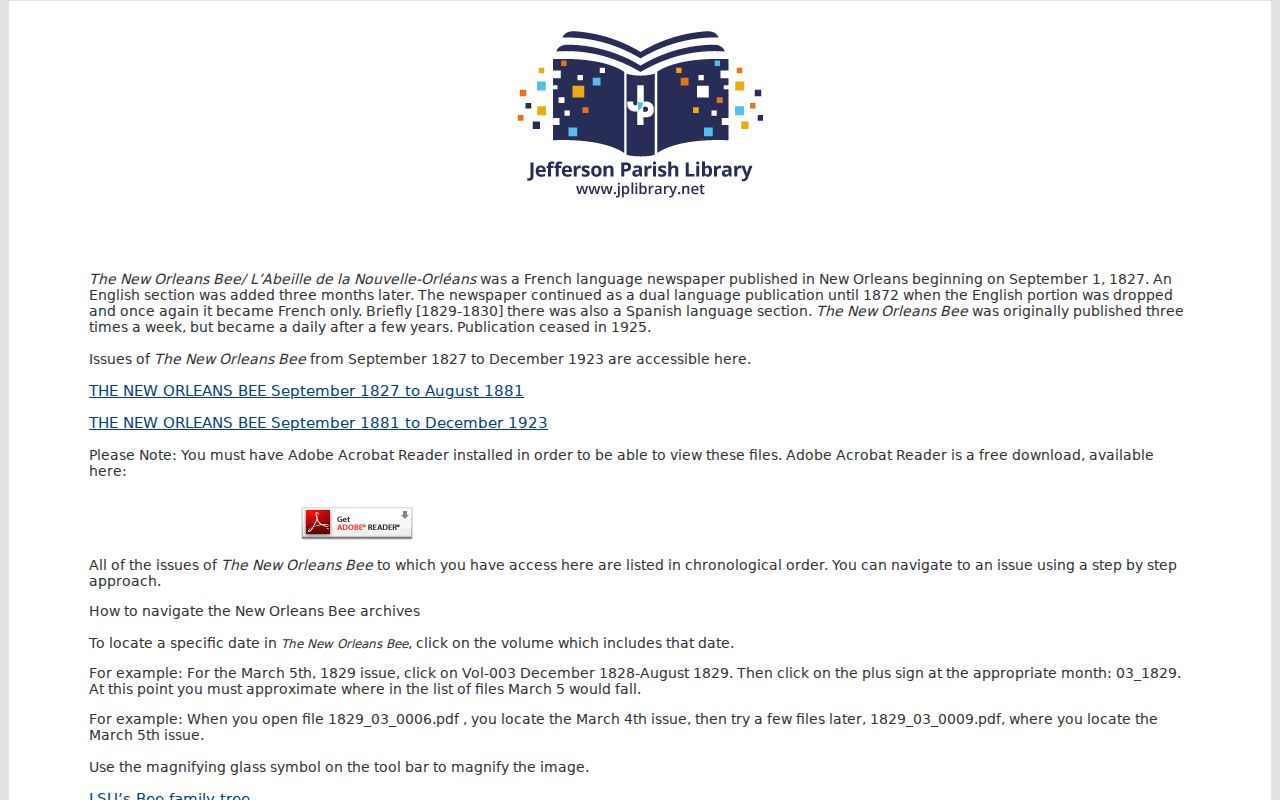
A dated notice can tie a surname to land. It can also link kin or neighborhood life in the gaps between city directory editions. Confirm the identity first in a Clerk record or an archive holding. Jefferson Parish genealogy rewards that extra step. The Jefferson Parish Library also points researchers to Times-Picayune material. That coverage spans 1837 through 2017. NewsBank access is current for searching it.
Cemetery operators and church archives can settle maiden names. Census schedules and vital records help with household ties. The Jefferson Historical Society's WPA holdings add depth. They include a 15-volume set and 13 volumes of Police Jury minutes covering 1834 through 1938. Some of that material, though, is missing from the collection.
Trace Jefferson Parish Families
City directories let a residents directory researcher follow one household between federal census years. Anchor your search with a firm date and place, then work one volume at a time, keeping spellings and labels exactly as printed.
- Fix the target street and municipality with a dated map, deed, census, or known family document. Retain old and modern forms.
- Search the nearest directory by surname, initials, and status. Read its title page and abbreviation key.
- Repeat in suburban and neighboring editions. Test Gretna, Jefferson City, Kenner, Metairie, Algiers, and New Orleans labels as the date warrants.
- Move through available years. Note every address shift, spouse or widow mark, and disappearance.
- Pair the run with the 1850-1950 federal census schedules, then use newspapers, deeds, cemeteries, churches, and vital sources.
- Cite publisher, year, page, image URL, exact spelling, and expanded marks.
A disappearance from the street directory rarely has one clean explanation. The person may have moved, died, shortened or respelled a surname, gone unlisted, or landed in a volume that no longer survives. An obituary, a deed, a later census, a church entry, or a cemetery record can separate those paths. Jefferson Parish family histories also show why accents, translation, initials, and name variants deserve testing in any resident lookup.
Jefferson Parish Directory Evidence
Treat any city directory entry as a single lead from one publisher in one year. It proves no present residence. It proves no property title. It cannot list every person in a home. It cannot complete a family link on its own. OCR errors can mangle a surname. Someone listed at a work address may actually live elsewhere. Always check the page image. Note the publisher's scope before trusting an entry for your Jefferson Parish residents directory work.
When online search stalls, use every access channel: JPL's desk and microfilm, the State Library reading room or catalog, the New Orleans City Archives in person or through a qualifying copy request, society referrals, licensed databases, newspapers, the State Archives, and municipal or parish requests. Ask for a collection and a year. Never ask for a private membership list.
Research rule. Keep directory work focused on family history, house history, heirs, reunions, and civic research. Respect protected records and private collections.